Biotin
INCI: D-Biotin
Biotin (D-Biotin, vitamin B7) is a water-soluble B-vitamin that contributes to the maintenance of normal hair, skin, and mucous membranes, as well as energy-yielding and macronutrient metabolism. It is the foundational active in private-label hair-skin-nails gummy ranges, with seven EU-authorised health claims under Regulation 432/2012.
- Hair, skin & nails
- Beauty stacks
- Daily multivitamins

At a glance
- Definition
- Biotin (D-Biotin, vitamin B7) is a water-soluble B-vitamin that contributes to the maintenance of normal hair, skin, and mucous membranes, as well as energy-yielding and macronutrient metabolism. It is the foundational active in private-label hair-skin-nails gummy ranges, with seven EU-authorised health claims under Regulation 432/2012.
- Authorised wording (summary)
- 3 authorised statements — see "US structure-function statements" below.
- Common positionings
- Hair, skin & nails
- Beauty / nutricosmetics
- Daily multivitamins
- Women's wellness
- Postnatal / hormonal support
- Format suitability
- Reviewed for gummies and sachets — confirmed per project.
Where this ingredient fits in the DAT Supply catalogue
Every format chip links through to its manufacturing hub and to the private-label catalogue for that format. The category chip routes to the matching vertical hub on the categories index.
- Beauty & skin
- Browse all ingredients
What it is
Biotin is a water-soluble B-vitamin that the human body cannot synthesise in meaningful quantities; it is obtained from the diet and from food supplements. In a gummy format it is the cornerstone active for hair-skin-nails beauty positioning — a category that has grown to become one of the two largest segments in the EU and US private-label gummy market.
For private-label brands, biotin is one of the most operationally straightforward actives to formulate with. It is heat-stable, soluble, tasteless, and required only at very low doses by weight. The strategic decision is positioning: standard daily multivitamins include 50–100 µg of biotin (100–200% NRV) within a broader profile; hair-skin-nails ranges almost universally run at 2,500–5,000 µg (5,000–10,000% NRV) per serving — a 'mega-dose' positioning rooted in consumer expectation rather than physiological requirement.
Origin and history
Biotin was first isolated by Margaret Averill Boas in 1927 during experiments examining toxic factors in raw egg white — what was then called 'egg white injury' in rats. The compound responsible for protecting against the injury was named biotin in 1936 and its chemical structure determined by Vincent du Vigneaud in 1942 (Nobel Prize 1955). Biotin's role as a coenzyme in carboxylation reactions was established in the 1950s and 1960s.
Commercial D-biotin is produced by total chemical synthesis — a multi-step route originally pioneered by Hoffmann-La Roche in the 1940s and refined since. The synthetic D-biotin is chemically and biologically identical to the form found in food (egg yolk, liver, nuts, seeds, salmon). For supplement supply, D-biotin is typically delivered as a 1% or 2% triturate with a maltodextrin or starch carrier, which enables accurate dosing at gummy-scale batch sizes.
Scientific overview
Biotin functions as a covalently bound coenzyme for five carboxylase enzymes in human metabolism: acetyl-CoA carboxylase 1 and 2 (fatty acid synthesis), pyruvate carboxylase (gluconeogenesis), propionyl-CoA carboxylase (amino acid metabolism), and 3-methylcrotonyl-CoA carboxylase (leucine metabolism). These reactions are central to energy production, lipid synthesis, and the metabolism of macronutrients.
In the context of hair, skin, and nail tissue, biotin's contribution operates indirectly through its role in fatty-acid synthesis and carbon-fixation in growing tissue. EFSA's substantiation of the 'maintenance of normal hair' and 'maintenance of normal skin' claims rests on the well-characterised deficiency syndrome: biotin deficiency, though rare in healthy populations, manifests clinically as alopecia, brittle nails, and dermatitis. Adequate biotin intake prevents this presentation.
Bioavailability of orally administered biotin is high and largely independent of dose. The body does not store meaningful quantities; excess biotin is excreted in urine. There is no established Tolerable Upper Intake Level — EFSA has consistently found no adverse effects from very high intakes, supporting the safety of the mega-dose positioning common in beauty-category gummies. The practical caveat is biotin's known interference with certain immunoassay-based blood tests at intakes above ~5 mg/day; this is a laboratory-measurement issue, not a physiological toxicity issue.
Why brands use Biotin
Biotin is one of the most familiar and commercially understood gummy actives across EU and US markets, particularly within the beauty-and-nutricosmetics segment. Hair-skin-nails ranges almost universally include biotin as the headline active, paired with zinc, selenium, vitamin E, and collagen peptides for a complete hair-skin-nails proposition. Daily multivitamins include biotin at 50–100 µg as part of the standard B-vitamin profile. Women's- wellness and postnatal ranges typically include 1,000–2,500 µg.
From a formulation standpoint, biotin is among the most operationally simple actives in the gummy toolkit. The dose is so low by weight that it has no measurable effect on texture, taste, colour, or cook behaviour. The standard supply form (1% or 2% triturate) handles the dose-uniformity question at batch scale. The active is heat- stable and survives standard cook profiles without overage considerations.
For pack-copy, the most common EU brief is hair-skin-nails positioning, anchored by 'contributes to the maintenance of normal hair' and 'contributes to the maintenance of normal skin'. Brand owners should avoid 'hair growth' or 'cures hair loss' language; the authorised wording is precise and DAT reviews final pack copy per project. Mega-dose ranges (>2,500 µg) should also include a discreet on-pack note advising consumers to inform their doctor if they are undergoing blood tests, addressing the known biotin- immunoassay interference.
Formats this ingredient is reviewed for
DAT Supply covers gummy, capsule, softgel, tablet, powder, oral strip, liquid drop, shot, jelly and pet formats. The list below reflects every format this ingredient is reviewed for — chips link through to the manufacturing hub for each format. Final compatibility, dose and matrix are confirmed per project.
Formulation notes
Verified formulation reference across the formats this ingredient is reviewed for — the Supported formats section lists every product format this active is approved for, and the per-format Considerations section below covers matrix-specific guidance. Final formulation, dose and on-pack copy are confirmed per project.
- Gummy fit
- Good
- Heat stable
- Yes
- Soluble in matrix
- Yes
- Cost tier
- Low
Forms available
- D-Biotin USP/EP (pure)
- D-Biotin 1% triturate (dilution for accuracy)
- D-Biotin 2% triturate
Dosage reference
reference-intake target reviewed per market: 50 µg. Hair-positioned gummy ranges commonly run at 5,000 µg (5 mg / 10,000% NRV) per daily serving — a 'mega-dose' positioning that has become consumer-default in beauty SKUs. Standard daily multivitamins use 50–100 µg (100–200% NRV). EFSA-authorised claims trigger at ≥15% NRV (7.5 µg). Mega-dose positioning is a marketing choice, not a clinical requirement; consumer perception drives the dose decision.
Taste & sensory
Effectively tasteless at all gummy-relevant doses. Pure D-Biotin has very low bulk per dose (5 mg = 0.005 g), so it has no impact on gummy texture or flavour. The triturate (1% or 2%) is the standard supply form to allow accurate weighing in batch production.
Manufacturing notes
D-Biotin 1% or 2% triturate is the standard supply form for accurate dosing at gummy scale. The active is heat-stable, soluble, and has minimal effect on gummy taste or texture. The principal manufacturing watchpoint is dose-uniformity at very low ingredient levels — managed via triturate dilution and standard mixing protocols. Vegan / kosher / halal positioning depends on the selected raw material and supplier documentation — confirmed per project.
Per-format formulation notes
Safe-baseline considerations for each format this ingredient is reviewed for. Final formulation, dose and on-pack copy are confirmed per project.
Gummies
- Taste masking and aroma load against the cooked-base flavour — confirmed per project.
- Heat exposure during cooking; coated or encapsulated forms may be required — confirmed per project.
- Matrix choice (pectin vs gelatin) and its effect on ingredient stability — confirmed per project.
- Per-gummy dose and serving count needed to hit the label claim — confirmed per project.
Sachets
- Powder flow and dose accuracy at single-serve sachet weights — confirmed per project.
- Barrier requirements (oxygen, moisture) for the active — confirmed per project.
- Reconstitution behaviour when the sachet is dosed into water — confirmed per project.
US structure-function statements
- Biotin supports healthy hair, skin, and nailsStructure-function (DSHEA)
- Biotin supports energy metabolismStructure-function (DSHEA)
- Biotin supports the nervous systemStructure-function (DSHEA)
Structure-function statements must appear with the FDA disclaimer in the same field of vision on the label. % Daily Value (DV) based on FDA 21 CFR 101.9.
Wording to avoid on pack copy
- No disease claims — do not state or imply that Biotin cures, prevents, or treats alopecia, hair loss, brittle-nail conditions, or any other disease.
- Structure-function claims must be accompanied by the FDA disclaimer in the same field of vision on the label.
- Mega-dose ranges should disclose the FDA's 2017 safety communication regarding biotin's interference with certain laboratory blood tests.
- No certification promises (vegan / kosher / halal / organic / non-GMO) on pack until per-project and per-batch supplier documentation is confirmed.
- No guaranteed shelf-life on pack until confirmed per project with stability data.
These statements have not been evaluated by the Food and Drug Administration. This product is not intended to diagnose, treat, cure, or prevent any disease. Structure-function claims are permitted under DSHEA (21 USC §343(r)(6)). Daily Value (DV) for Biotin is 30 µg under FDA 21 CFR 101.9.
These statements have not been evaluated by the Food and Drug Administration. This product is not intended to diagnose, treat, cure, or prevent any disease.
Studies & evidence
External peer-reviewed sources and regulatory opinions. Citations only — DAT does not endorse the publishers.
EFSA NDA Panel·EFSA Journal·2009
EFSA NDA Panel·EFSA Journal·2014
U.S. Food and Drug Administration·FDA Safety Communication·2017
Patel DP, Swink SM, Castelo-Soccio L·Skin Appendage Disorders·2017
European Commission·EUR-Lex·2012
Product concepts featuring Biotin
Private-label product concepts where Biotin appears in the formula. Each opens to a product brief and quote route.
Hair & Nails Gummies
Private label hair & nails gummies for supplement brands. Pectin-based, target-market reviewed manufacturing.
Hair Volume Gummies
Private label hair volume gummies for supplement brands. Pectin-based, target-market reviewed manufacturing.
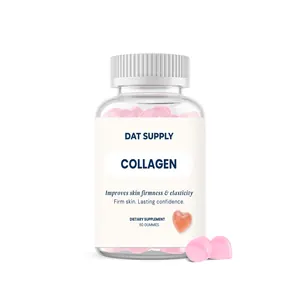
Collagen Gummies
Private label collagen gummies for supplement brands. Pectin-based, target-market reviewed manufacturing.
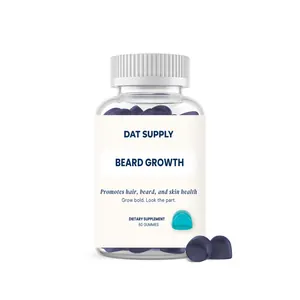
Beard Growth Gummies
Private label beard growth gummies for supplement brands. Pectin-based, target-market reviewed manufacturing.
Vegan Hair, Skin & Nails Gummies
Private label vegan hair, skin & nails gummies for supplement brands. Pectin-based, target-market reviewed manufacturing.
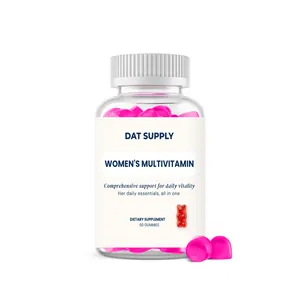
Women's Multivitamin Gummies
Private label women's multivitamin gummies for supplement brands. Pectin-based, target-market reviewed manufacturing.
Synergies & conflicts
Pairs well with
Pairs naturally with Zinc, Vitamin E, and Collagen for hair-skin-nails positioning; with Folic Acid / Folate and B-Complex for daily multivitamin positioning; with Selenium for nail-strength positioning.
Care when combining with
Very high biotin intake (>5 mg/day) can interfere with certain blood-test assays (notably thyroid function tests, troponin, and hormone panels). Consumers undergoing medical testing may need to pause supplementation — this is a known issue and warrants a discrete consumer-information note on pack copy for any mega-dose range.
Adjacent reading
Pairings, resource guides and blog notes most often associated with Biotin on DAT Supply briefs.
Common pairings
Ingredients that frequently co-formulate with Biotin.
Develop a formula featuring Biotin
A ready white-label formula exists — open a product brief, or talk to our team to align the launch plan.